

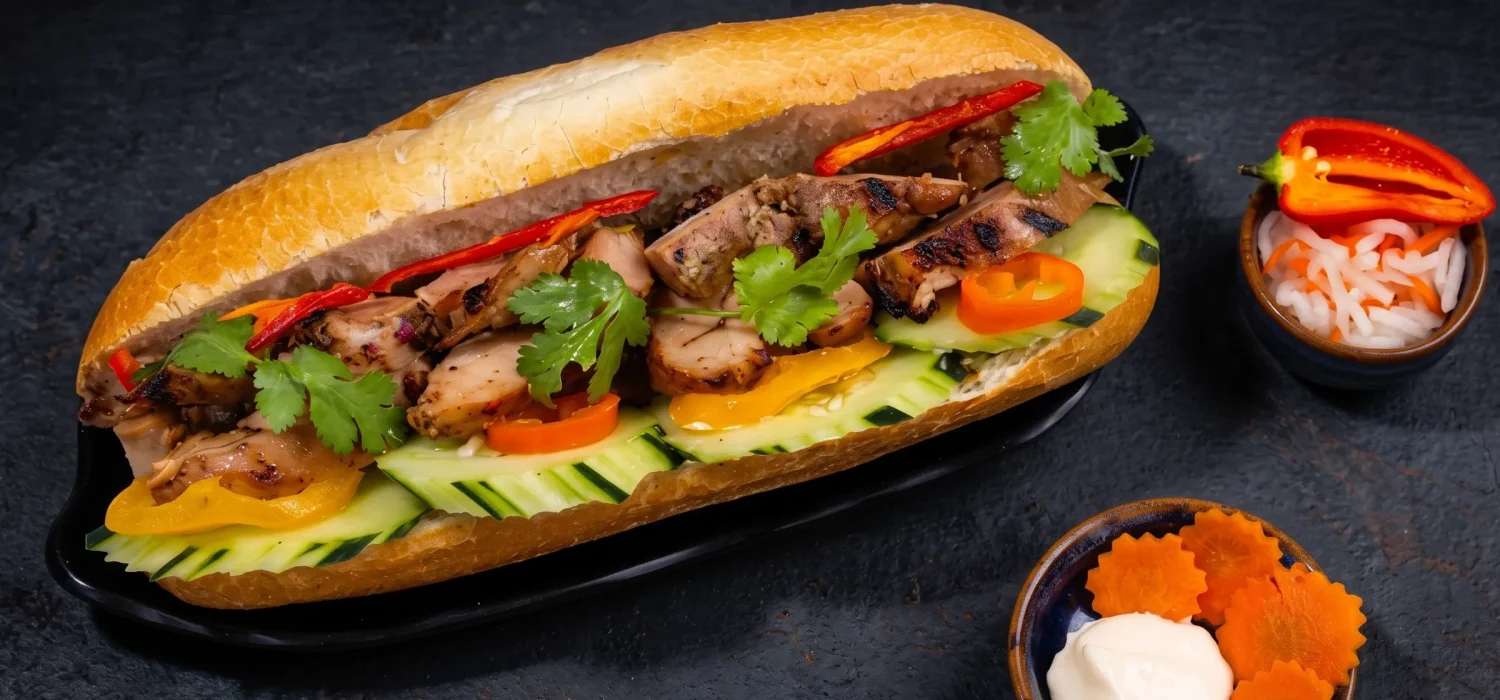
Walk into Phở Hà Plus and you’ll see Bánh Mì Thịt Nướng called out by name right on the homepage, listed alongside the restaurant’s signature pho as one of the dishes worth knowing before you order. If you’ve never had a proper Vietnamese bánh mì, here’s what you’re actually getting — and why it’s worth ordering over a regular sandwich.
Starting With the Bread
“Bánh mì” technically just means “bread” in Vietnamese, and the term has come to refer to the entire sandwich built on a specific style of baguette. That baguette is the foundation of everything — it has to have a thin, crackly, shatter-on-the-first-bite crust on the outside and a light, airy, almost cloud-like interior. This isn’t accidental. Vietnamese bakers adapted the French baguette (a colonial-era import) by blending wheat flour with rice flour, which produces a lighter crumb and a crispier shell than a traditional all-wheat French loaf. The result holds up structurally to wet fillings without going soggy in the first five minutes, while still being light enough that the sandwich doesn’t eat like a brick.
Thịt Nướng: The Charbroiled Pork
“Thịt nướng” translates roughly to “grilled meat,” and in the context of bánh mì, it specifically refers to thin-sliced pork that’s been marinated — typically in a combination of fish sauce, garlic, sugar, and sometimes lemongrass or five-spice — and then charbroiled over open flame until the edges caramelize and char slightly while the inside stays tender. That char is the entire point. It adds a smoky, slightly sweet, slightly salty depth that a pan-fried or oven-roasted version simply can’t replicate. The marinade does double duty: it tenderizes thin-cut pork that would otherwise dry out fast over high heat, and it builds the sweet-savory backbone that makes the pork work against the other components in the sandwich.
What Goes Inside
A proper Bánh Mì Thịt Nướng is a study in contrast — every component is chosen to push against the others. Inside the baguette, alongside the charbroiled pork, you’ll typically find:
- Đồ chua — pickled, julienned carrots and daikon radish, which bring sharp acidity and crunch
- Fresh cucumber — cool, watery crunch that cuts the richness of the pork
- Cilantro — for a bright, herbal top note
- Pickled jalapeño or fresh chili — for heat, scaled to preference
- Mayonnaise — a French-influenced addition that adds richness and helps bind the layers
- Maggi seasoning or a light soy drizzle — in some versions, for an extra umami layer
The genius of the sandwich is that no single bite tastes like just “pork sandwich.” You get smoky char, bright acid, cool crunch, herbal lift, and creamy richness all at once, all inside bread that’s sturdy enough to hold it together but light enough to disappear as you eat.
Why It’s Different From a Regular Sandwich
If you’ve only had Western deli sandwiches, the closest comparison might be a banh mi’s textural range: most American sandwiches are built around one or two textures (soft bread, soft filling). A Vietnamese bánh mì is built around contrast on purpose — crackly crust against soft crumb, tender charred pork against crunchy pickled vegetables, rich mayo against sharp chili. It’s also typically served at room temperature or just-off-the-grill warm rather than hot-melted, which keeps every component distinct instead of blending into a uniform texture.
How to Order It at Pho Ha Plus
Bánh Mì Thịt Nướng at Phở Hà Plus is featured as one of the restaurant’s signature offerings, sitting alongside the Phở Tai Gau as a homepage highlight — a strong signal that it’s a kitchen specialty rather than an afterthought item. It’s a smart order if you want something substantial but lighter than a full bowl of Phở, and it travels well for takeout, which makes it a good pick for a quick lunch grabbed on the way through Diamond Creek Village Shopping Center. Pair it with a side of spring rolls or a Vietnamese iced coffee if you want the fuller experience without committing to a full pho bowl.
Bring It Home
You don’t need to know the etymology of “thịt nướng” to enjoy the sandwich, but understanding the construction — the bread, the char, the pickle, the herbs — makes it easier to appreciate why this particular sandwich has become one of Vietnam’s most internationally recognized dishes. It’s not just a sandwich with Vietnamese ingredients; it’s a specific, deliberate balance of textures and flavors refined over generations.
Ready to try it? Order your Bánh Mì Thịt Nướng online now for pickup or delivery from Phở Hà Plus in Walnut, CA.
Q&A Pairs:
Q: What’s the difference between Bánh Mì Thịt Nướng and regular banh mi?
A: “Thịt nướng” specifically means charbroiled grilled pork — other banh mi varieties use different proteins like pâté, cold cuts, or meatballs (xíu mại).
Q: Is Bánh Mì Thịt Nướng spicy?
A: It’s not inherently spicy — the heat comes from optional pickled jalapeño or chili, which you can ask to have light, regular, or left off.
Q: Does the sandwich travel well for takeout?
A: Yes — it’s designed to be eaten at room temperature, so it holds up well for pickup or delivery without losing quality.